
When a structure needs more than a shallow footing, foundation drilling becomes the starting point for long-term stability. In Southern California—where coastal sands, clay-rich soils, decomposed granite, varied elevations, and seismic considerations can all show up on the same map—foundation drilling projects are often the difference between a build that performs as intended and one that fights settlement, shifting, and water-related movement over time.
Unlimited Drilling & Foundations, Inc. has been completing foundation drilling and related geotechnical work since 1993, with thousands of projects delivered on time and within budget, and a commitment to keeping work in-house rather than handing it off to a long chain of subcontractors. If you’re planning a new build, a hillside project, a retaining wall system, or a structural upgrade that requires deep foundations, here’s what to know about foundation drilling projects—from early planning to installation details that protect your schedule and your structure.
What Counts as a Foundation Drilling Project?
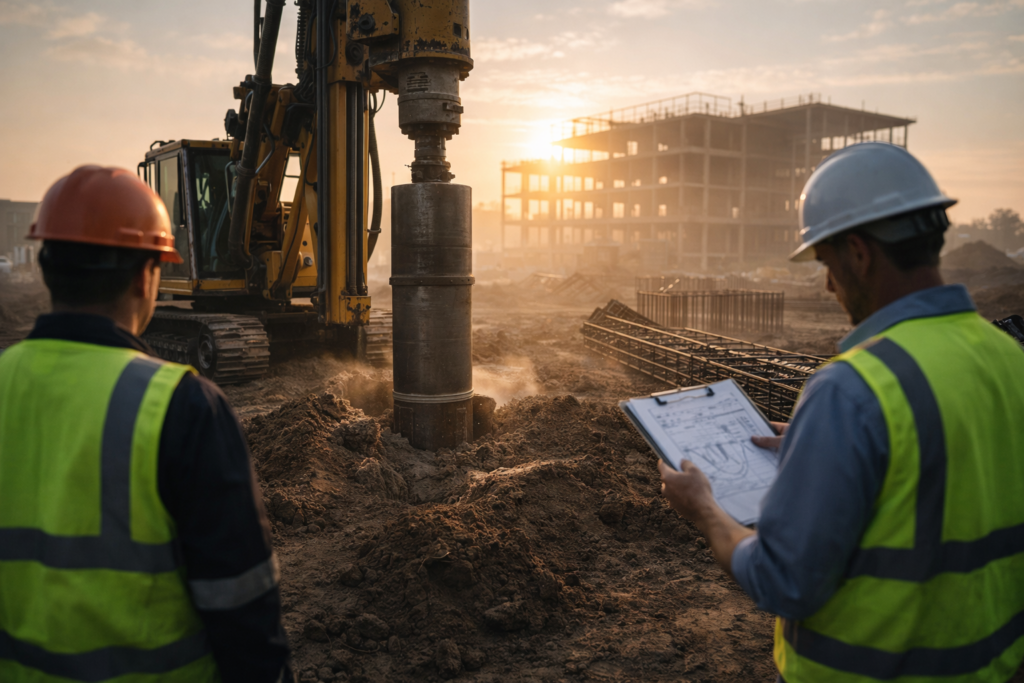
“Foundation drilling” is often used as an umbrella term for deep foundation work where cylindrical shafts or smaller-diameter drilled holes are created to support structural loads, stabilize slopes, or anchor retaining walls. In practice, many projects involve caisson drilling (also called drilled shafts), where deep, round excavations are reinforced and filled with concrete to transfer loads down to competent soil or bedrock.
These drilled foundation elements are commonly used when:
- Surface soils are weak, loose, expansive, or variable and can’t reliably support the load.
- The site is on a slope or near a hillside where stability is a primary concern.
- Retaining walls, shoring, or slope stabilization systems need deep anchorage.
- Space is limited and the drilling approach must adapt to access constraints.
Because drilling projects interact directly with soil conditions, groundwater, and jobsite access, planning matters. The best outcomes come from aligning design intent, site realities, and drilling method early—before the calendar is set and trades are stacked behind you.
Why Southern California Sites Demand a Smart Drilling Plan
Foundation drilling projects aren’t one-size-fits-all, especially in Southern California. A site’s geology and moisture behavior can change from block to block. Some properties are built on fill; others sit near bedrock transitions; some are influenced by seasonal moisture shifts; and many hillside lots require careful sequencing to reduce risk while excavation and reinforcement are underway.
That’s why drilling projects often include (or rely on) a combination of:
- Site assessment and soil information to determine depth, diameter, and reinforcement requirements.
- Access planning to select equipment that fits the property without unnecessary disruption.
- Protective drilling methods (like casing) when conditions could compromise borehole stability.
- Coordination with engineers, inspectors, and the rest of the build team so the drilling phase supports the full schedule.
Even when a design calls for the same foundation type, the execution details can change depending on what the ground and jobsite actually present on install day.
Common Foundation Drilling Project Types
Foundation drilling supports a wide range of work. Here are a few project categories that frequently require drilled foundations or closely related drilling services:
1) New Construction Needing Deep Foundation Support
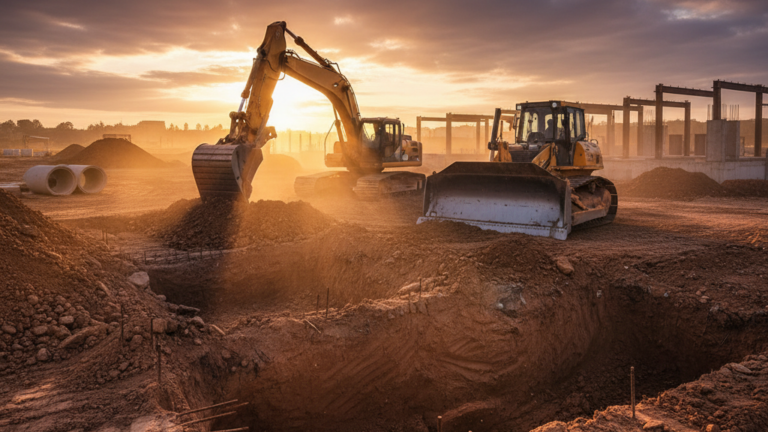
When a new build needs load transfer beyond shallow soil layers, drilled shafts can anchor the structure into more stable material. This is common for custom homes, additions, and builds where topsoil conditions aren’t dependable.
2) Hillside Builds and Slope-Adjacent Structures
Hillside construction often requires deep foundations to reduce movement risk. Drilled caissons can help stabilize the structure by transferring loads to stronger layers below and providing resistance against soil movement.
3) Retaining Wall and Earth-Retention Systems
Many retaining walls depend on drilled elements for stability. Deep drilling can support wall footings, soldier piles, or other structural components designed to retain soil and manage lateral pressure.
4) Shoring and Temporary Excavation Support
When excavations are near existing structures or tight boundaries, shoring systems may be required to stabilize the excavation and protect adjacent improvements. Drilling can be a key part of installing those systems safely.
5) Repair and Reinforcement Projects
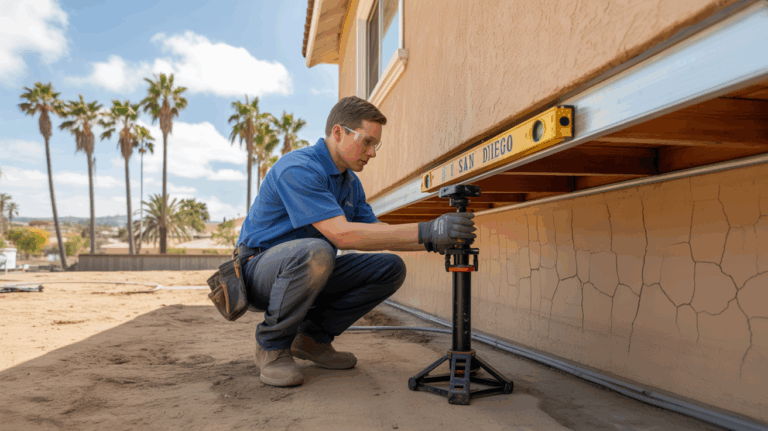
Some foundation repair and stabilization projects incorporate drilled elements or related techniques to reinforce existing conditions, especially when soil movement or site geometry calls for deeper support.
What the Caisson Drilling Process Typically Looks Like
While every site is different, most caisson-based foundation drilling projects follow a similar sequence:
- Review of plans and soil information to confirm shaft sizing, depth, and reinforcement requirements.
- Equipment selection and mobilization based on access, hole diameter, and target depth.
- Drilling the shaft to engineered depth while maintaining borehole stability.
- Reinforcement placement by lowering a rebar cage into the drilled shaft.
- Concrete placement to complete the foundation element.
- Verification and coordination so the next phases of construction can begin on schedule.
The critical variable is stability: the borehole must maintain shape and alignment long enough for reinforcement and concrete placement. In certain conditions—loose sands, wet soils, deeper shafts, or urban/confined sites—additional protection is often necessary.
When Casing Matters (and Why It Can Save a Project)
One of the most important tools in challenging drilling conditions is casing: a temporary or permanent steel pipe inserted into the drilled hole to maintain borehole shape and stability. Casing helps prevent cave-ins, controls water intrusion, and supports accurate borehole dimensions during drilling and concrete placement.
Casing is commonly used when:
- Soils are unstable and the sidewalls risk collapsing during drilling.
- Groundwater levels are high, making water intrusion and sidewall degradation more likely.
- Caissons are deep and sidewall pressure increases with depth.
- Access is tight or the project is near existing structures where precision matters.
- Geology changes across rock-to-soil transitions that can destabilize the borehole.
In many cases, casing is removed after concrete is placed. In other designs, it may be left in place as a permanent component when engineering requirements call for it. Either way, using casing when conditions warrant it can protect quality and reduce the risk of delays caused by collapsed holes or rework.
Access Constraints: Choosing the Right Drilling Equipment
Not every foundation drilling project has wide-open access. Many residential and hillside sites require equipment that can reach the work area without tearing up the property or requiring excessive demolition.
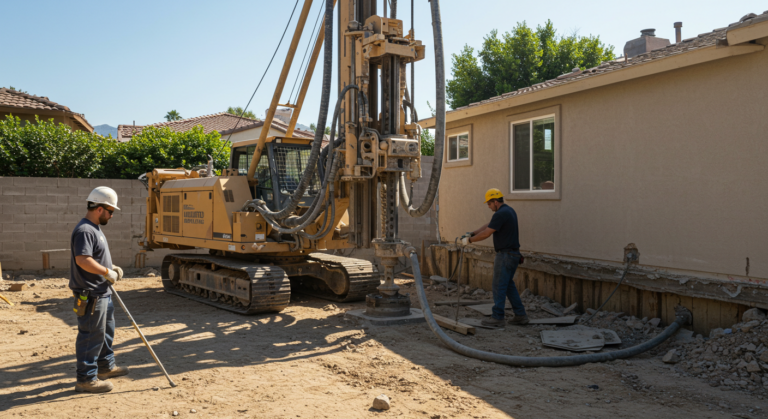
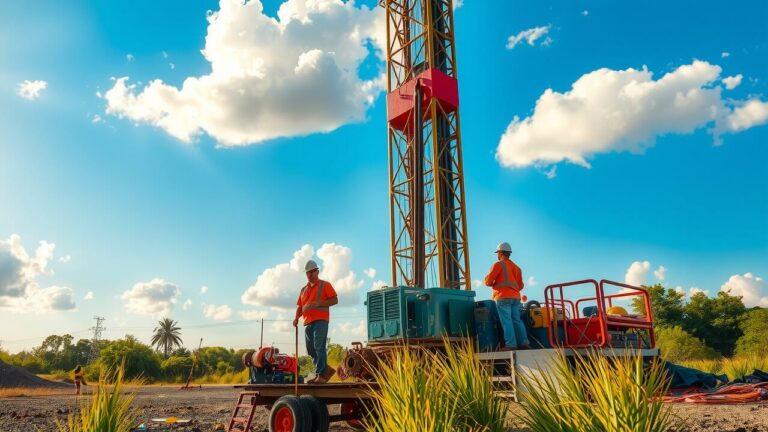
Unlimited Drilling & Foundations, Inc. offers multiple drilling approaches designed for limited access conditions, including:
- Limited access caisson drilling with as little as 36 inches of required access, capable of drilling 36-inch diameter holes to 50 feet deep.
- Mini caisson drilling rigs that can work with as little as 24 inches of required access, capable of drilling 18-inch diameter holes to 50 feet deep.
- Tripod drills that are extremely portable and can be carried, capable of drilling 6-inch diameter holes to 50 feet deep.
- Mini crawler crane-mounted drills with only 36 inches of required access, capable of drilling 24-inch diameter holes with a 25-foot reach.
Access planning is a major factor in keeping a project efficient. Selecting the right equipment can reduce site disruption, streamline mobilization, and support safer work in tight or sloped locations.
If you want to learn more about available drilling options, visit the Drilling & Caissons page.
Scheduling Foundation Drilling Projects: How to Avoid the Seasonal Rush
Timing can be a competitive advantage. In Southern California, spring is often one of the most active construction seasons, and drilling schedules can fill quickly—especially for projects that require deep foundations, retaining wall work, or hillside stabilization.
Early scheduling supports:
- Crew and equipment availability during peak demand.
- Better coordination with excavation, concrete, framing, and other trades.
- More accurate budgeting when assessments and quotes are secured early.
- Fewer administrative slowdowns as permit and inspection workloads increase through spring and summer.
Whether you’re targeting a March start or planning further out, the principle is the same: align drilling with the broader build timeline, because deep foundation work often sits at the front of the schedule—meaning delays here tend to cascade.
A Practical Pre-Drill Checklist for Project Owners and Contractors
If you’re preparing for a foundation drilling project, use this checklist to help your jobsite and team stay aligned:
- Confirm foundation design intent: shaft sizes, depths, spacing, reinforcement requirements, and any special installation notes.
- Review site access: gate widths, path clearance, overhead constraints, and staging areas.
- Identify underground utilities and confirm required markings and documentation.
- Plan spoils management: where excavated material will go and how it will be handled.
- Discuss groundwater risk: if there’s a chance of wet conditions, plan for casing or other controls.
- Coordinate inspections: verify what needs to be inspected and when.
- Sequence adjacent work: confirm how shoring, retaining walls, slope stabilization, or excavation phases interact with drilling.
A short planning conversation up front can prevent long delays later—especially when access, soil behavior, or weather shifts become constraints.
FAQ: Foundation Drilling Projects
How deep do foundation drilled shafts typically go?
Depth depends on engineering design and site conditions. Some drilled shafts are designed to bypass weak upper soils and reach stronger strata below. On limited access rigs used by Unlimited Drilling, capabilities can reach up to 50 feet in depth depending on the equipment and diameter requirements.
Do all drilling projects require casing?
No. Casing is used when conditions threaten borehole stability—such as loose soils, higher groundwater, deeper drilling, or tight urban sites that demand extra precision. When it’s needed, casing can prevent collapses and improve quality control.
Can drilling be done on tight residential lots?
Yes. Limited access drilling options can work through narrow access points, with some equipment requiring as little as 24 to 36 inches of access depending on the rig and drilling approach.
How do foundation drilling projects connect to slope stabilization and retaining walls?
Deep drilling is often a foundational step for both. Retaining wall systems may rely on drilled elements for support, and slope stabilization work often depends on anchoring into stable subsurface material to reduce movement risk.
Build on a Solid Plan (and a Solid Foundation)
Foundation drilling projects are where structural performance begins. When drilling is planned well—based on site realities, access limitations, and soil behavior—it sets the stage for smoother construction, fewer surprises, and better long-term results. From limited access caisson drilling to casing solutions for unstable soils and groundwater, the right approach is as much about preparation as it is about the drill itself.
If you’re planning a foundation drilling project in Southern California—whether it’s for new construction, a hillside site, retaining walls, or stabilization work—Unlimited Drilling & Foundations, Inc. is ready to help you move forward with confidence.
Contact us to discuss your project, request an estimate, and get your drilling phase aligned with the schedule and site conditions that matter most.